Nursery Rhyme Olympics

Children ages3 to 8 and their families learned popular nursery rhymes by playing games like London Bridge Balance Beam and Jack & Jill Crown Relay. Each station had an activity, instructions about how to do the activity, and the corresponding nursery rhyme. Families were encouraged to recite the rhyme at each station.

Jack Be Nimble Candlestick Hurdles

A-Tisket, A-Tasket Basketball

Mother Goose Waddle Race

London Bridge Balance Beam

Jack & Jill Crown Relay

Ring Around the Rosie Ring Toss

To Market, To Market Alphabet Relay


Sensational Play

Children ages 3 through 6 and their families were invited to get squishy, gooey, and wet exploring their five senses.

Children rotated among stations, sorting, writing, making texture rubbings, experimenting with things that float in water, and creating with play dough.

Superhero Academy

Children in Kindergarten through 5th grade were invited to attend this program to transform themselves into superheroes with accessories and feats of strength for both body and mind.

Children created a superhero ID badge, decorated a mask, completed an obstacle course, disposed of kryptonite, bowled over villains, and took a picture in front of the city. After they completed the checklist of tasks, they exchanged it for a graduation certificate from Superhero Academy.

STEM Storytime: Things That Grow

STEM storytime incorporates science, technology, engineering, and math concepts and is geared to children ages 2 to 6. In this storytime, we explored things that grow. The following shows the hands-on stations for children to learn more about the day’s theme.

Children could measure themselves to see how tall they were in inches, feet, and centimeters.

Children quizzed themselves by looking at the seeds and matching the picture of each plant with its seeds.

Children used a magnifying glass and their sense of touch to explore each plant and its parts.

Children used the felt plant parts to construct a flower according to the diagram.

Children examined the inside and outside of seeds and learned about the parts and functions of a seed.

Vocabulary words and their definitions were posted on the tables to aid in discussion of things that grow.

STEM Storytime:The 5 Senses

STEM storytime incorporates science, technology, engineering, and math concepts and is geared to children ages 2 to 6. In this storytime, we explored our five senses. The following shows the hands-on stations for children to learn more about the day’s theme.

Hearing: Plastic eggs were filled with different items. Children shook the eggs and paired the eggs that sounded the same.

Smell: Cotton balls were soaked with different substances (coffee, peppermint extract, lemon juice, etc.). Children smelled and tried to identify the scent.

Touch: Cardboard squares were covered with materials of various textures. Children felt each one and described how it felt (soft, rough, smooth, etc.)

Taste: Felt board pieces showed the different tastes and pictures of foods. We talked about the different tastes and categorized them on the board. Children could explore further after storytime.

Sight: Children used their sense of sight to find different objects in the library’s I Spy books.

BookWarms Winter Reading Program

BookWarmWorm1BookWarms is the winter reading program for children and teens. At registration, each participant received a BINGO card. If the child got a BINGO with four squares in a row, they got to choose a prize from the treasure chest. If the child got a blackout and completed all of the squares, they got to choose a free book. I liked this format better than tracking the number of hours or books read. It challenged avid readers to try new genres and gave reluctant readers more chances for success.
STEM in the Library

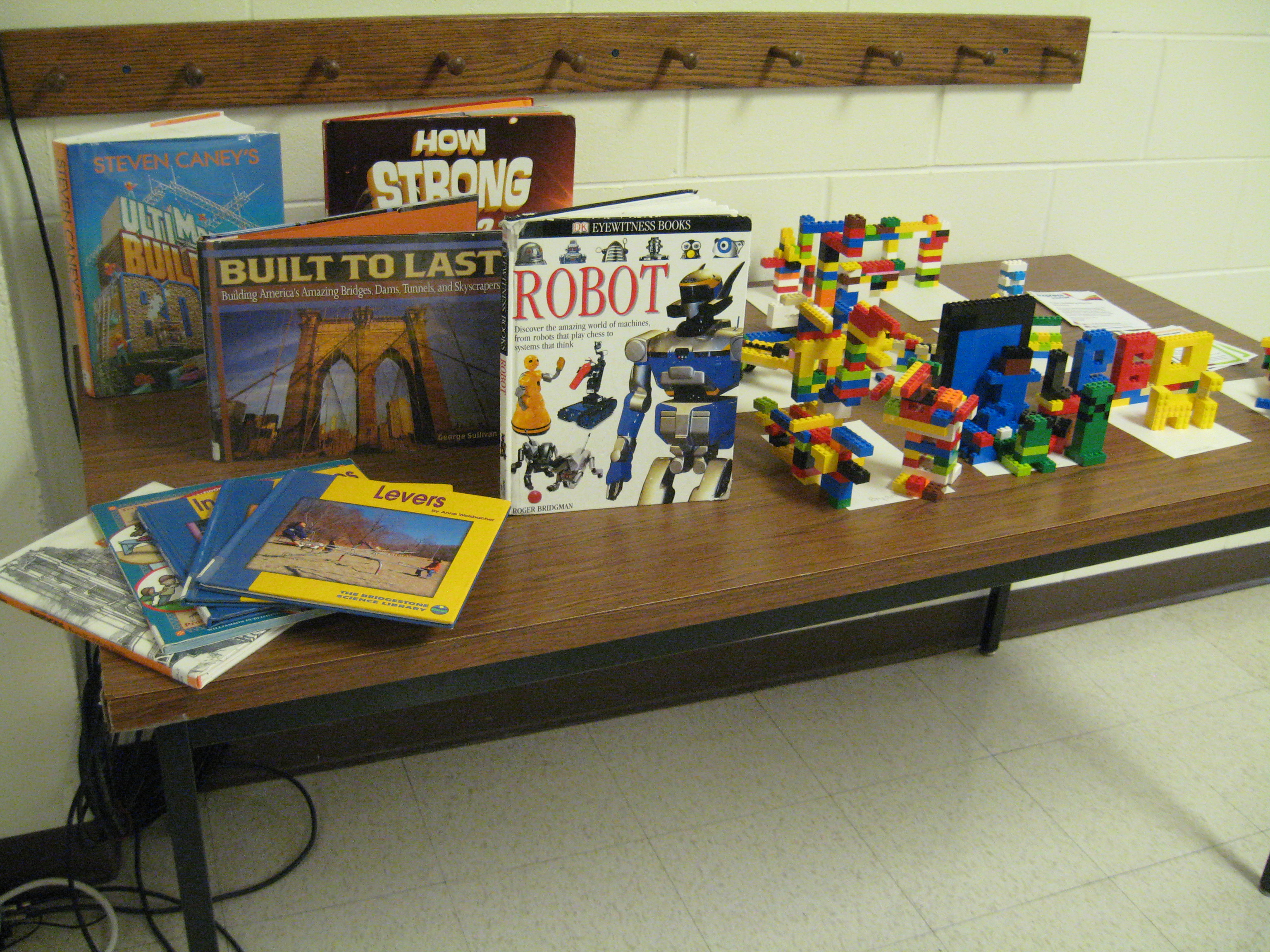
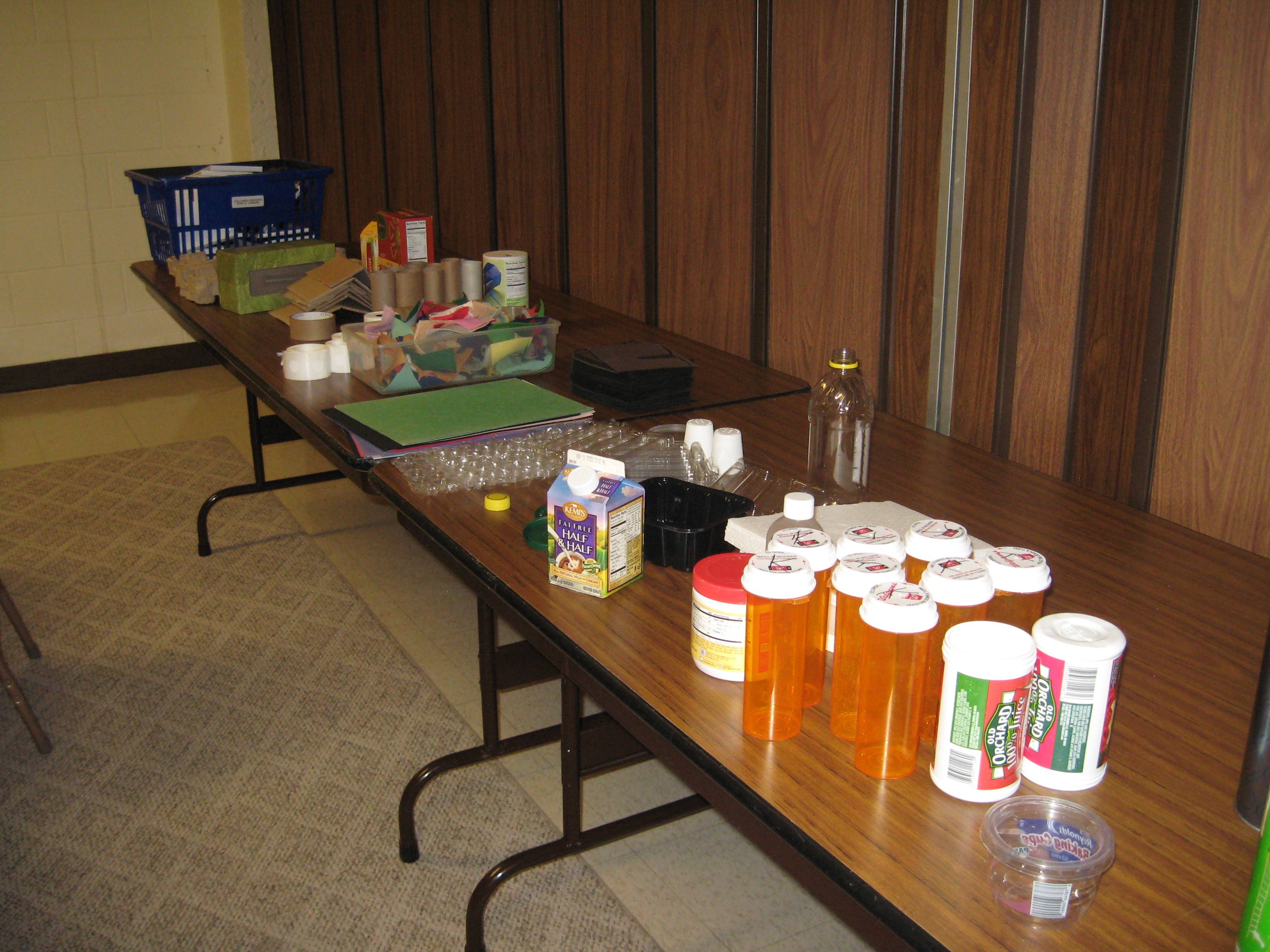
Having science, technology, engineering, and math programs in the library is nothing new. When the library had grant funding for programs, we had instructors from outside organizations present programs such as The Mystery of Chemistry, Rube Goldberg Marble Machine, The Science of Toys, and Radical Robots. Now that we no longer have grant funding and have a tighter budget, I’m trying to keep STEM in the library with some in-house programming. One such program was Build Your Own City. I asked coworkers to bring in their recycling and set out everything on a long table. Each participant received a large flat piece of cardboard, their choice of recyclables, tape, and glue. I set out some books about buildings and cities for inspiration. We brainstormed things we liked in our city and things we think our city is missing. Each person designed her own city. At the end, each person shared her city with the group. Another program is LEGO Club. Using grant money, I purchased several boxes of LEGO bricks. Once a month, LEGO Club meets to build anything and everything. I set out books about buildings, bridges, and skyscrapers for inspiration. At the end of the hour, each participant can choose one creation to put in a display case in the library for everyone to see. It is interesting to see how many parents and children work together to create their masterpieces. To celebrate International Games Day, we hold a gaming program in the library. Last November, in addition to the traditional board games and Wii games, I created a live-action Angry Birds game. I saved boxes and tubes of different shapes and sizes. Participants worked in teams; one team set up the structure, and the other team tried to knock it down. The structure that lasted the longest won a point for the construction team. It was a lot of fun, but it was also more challenging than participants originally thought it would be. I chimed in every once in a while to ask questions like, “How do you think you could make your structure more sturdy?” and “Why does that tower fall over but that tower stays standing?” Teams became more strategic as time went on, noticing things like the number of boxes on the base level made a difference. Build Your Own City LEGO Angry Birds